
Reliable. Compliant. Scalable.
OTP Service Provider – SMS, WhatsApp & Voice OTP API
Deliver one-time passwords over SMS, WhatsApp and voice — on priority routes, with automatic fallback, so users get their code before they give up.
- DLT-ready onboarding
- Real-time delivery reports
- No setup fee
Priority routes
Fast, direct delivery
Live reports
Status for every message
API + panel
No-code or full API
Human support
Real people, fast replies
What is an OTP service?
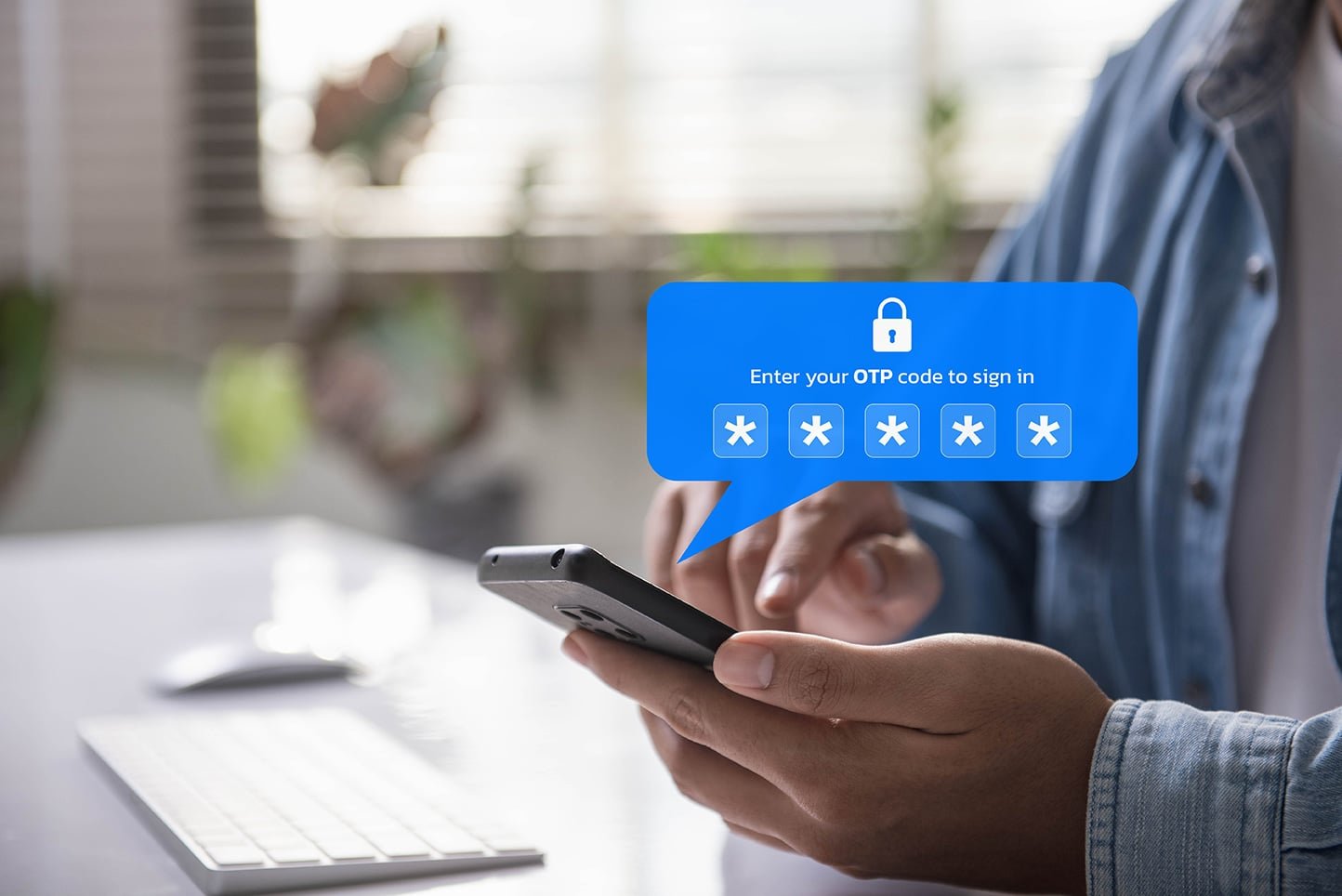
A one-time password (OTP) is a short numeric code, usually 4 to 8 digits, that is valid for a single login or transaction and expires after a few minutes. Because the code is sent to something the user physically has — their phone — it proves the person is who they claim to be, even if their password has been stolen.
An OTP service provider delivers those codes for you. Your application generates (or asks us to generate) the code, calls our API with the user's mobile number, and we deliver it over the fastest available channel. You then check the code the user enters against the one that was sent.
OTP is now the default security step for Indian digital services: account sign-up, login, password reset, UPI and card payments, KYC, address changes and high-value actions in banking and insurance apps all depend on it. If the OTP doesn't arrive in seconds, users abandon the flow — so delivery speed is directly tied to conversion.
Compliant by design
TRAI & DPDP aligned
OTP channels: SMS, WhatsApp and voice
No single channel reaches every user every time. SMS works on every phone but depends on network coverage; WhatsApp needs data but offers rich, branded messages; voice reaches users with poor SMS reception and those who need an audio code. A good OTP setup uses more than one.
| Channel | Best for | Needs internet? | Notes |
|---|---|---|---|
| SMS OTP | Default channel for all users | No | Works on every phone; must use a DLT-registered transactional template |
| WhatsApp OTP | Smartphone users, international numbers | Yes | Authentication template with copy-code or one-tap autofill button |
| Voice OTP | Fallback, accessibility, landlines | No | Code is read out by an automated call, usually twice |
Automatic fallback: how we keep OTPs arriving
Fallback means that if an OTP isn't delivered on the first channel within a time you set, we automatically try the next one. Your application makes one API call; we handle the retries.
- 1
Send on the primary channel
Most businesses start with SMS for reach, or WhatsApp where users have already shared their WhatsApp number.
- 2
Watch the delivery status
We track the operator or WhatsApp delivery receipt in real time.
- 3
Fall back after a timeout
If no delivery is confirmed within your chosen window, the same code is sent on the next channel — for example WhatsApp, then voice.
- 4
Report every attempt
Each attempt is logged with channel, status and timestamp, so you can see which channels actually deliver for your users.
Where OTP verification is used
Sign-up & login
Verify a new user's mobile number at registration and offer passwordless login with a code.
Payments & transactions
Confirm card, wallet and net-banking payments, fund transfers and high-value orders.
Password & PIN reset
Let users recover accounts securely without calling support.
KYC & onboarding
Verify mobile ownership during digital KYC for banks, NBFCs, brokers and insurers.
Cash-on-delivery confirmation
Confirm COD orders and delivery handover to cut fake orders and returns.
Sensitive account changes
Require an OTP before changing a registered email, phone number or bank account.
OTP API for developers
Our OTP API is designed so a developer can add verification in an afternoon. You can either generate the code yourself and use our messaging API to deliver it, or use our verify flow, where we generate, deliver and validate the code for you.
- Send OTP: one call with the mobile number, template and optional fallback channels
- Verify OTP: submit the code the user entered and get a pass or fail response
- Resend: trigger a resend on the same or a different channel
- Configurable code length, expiry time and maximum attempts
- Delivery webhooks with per-channel status
- Sandbox keys for testing before you go live
OTP security best practices
OTP is only as secure as the way it is implemented. Whichever provider you use, follow these practices:
- Expire codes quickly — 5 to 10 minutes is typical — and invalidate them after one successful use
- Limit verification attempts and resend requests per number to stop brute-force and SMS-pumping fraud
- Never include the OTP in URLs or logs, and store only a hash of the code server-side
- Tell users in the message never to share the code, and name your brand so they recognise it
- Rate-limit OTP requests by IP and device, and block number ranges with abnormal traffic
- Use the Android SMS Retriever or WhatsApp one-tap autofill so users don't need to copy codes manually
DLT rules for OTP SMS
In India, OTP SMS are sent as transactional messages. That means the OTP template must be registered on DLT under your entity and a 6-character alphabetic header, exactly as it will be sent, with the code as a variable. Transactional OTP messages can be sent 24×7 and are delivered to numbers on the DND registry.
A good OTP template is short, names your brand, states what the code is for and how long it is valid, and warns the user not to share it — for example: '123456 is your PromoMarketingSolution login code. Valid for 10 minutes. Do not share it with anyone.' We review your OTP templates during onboarding so they are approved first time.
What affects OTP delivery speed
Most OTPs on priority routes are delivered within seconds. When they are slow, the cause is usually one of a few things: a template that doesn't match DLT exactly and gets blocked, a recipient who is out of coverage or has a full inbox, operator congestion during peak events such as sale launches, or a provider that routes OTPs through promotional or reseller routes to save cost.
We send OTPs only on transactional routes, monitor delivery times by operator, and recommend a fallback channel so a single slow route never stops a user from logging in.
OTP pricing
OTP is billed per message sent on each channel: per SMS part for SMS OTP, per authentication template message for WhatsApp OTP and per call for voice OTP. You only pay for fallback attempts that are actually sent. Rates fall as monthly volume grows; see our pricing page or ask for a quote based on your traffic.
OTP & Verification guides
Any business that logs users in, takes payments or confirms identity needs OTP — from banks and fintech apps to e-commerce, healthcare and education platforms.
OTP & Verification FAQs
What is an OTP service provider?+
An OTP service provider delivers one-time passwords to your users over SMS, WhatsApp or voice calls through an API, and reports whether each code was delivered. Some providers, including PromoMarketingSolution, can also generate and verify the codes for you.
Can OTP SMS be sent to DND numbers?+
Yes. OTP SMS are transactional messages, so they are delivered 24×7 to all numbers, including those registered on the Do Not Disturb (DND) list, provided the template is registered on DLT.
What is the difference between SMS OTP and WhatsApp OTP?+
SMS OTP works on every phone without internet. WhatsApp OTP needs the user to have WhatsApp and a data connection, but supports branded messages and one-tap autofill. Many businesses use both, with automatic fallback.
What is voice OTP?+
Voice OTP delivers the code through an automated phone call that reads out the digits. It is commonly used as a fallback when SMS is delayed, and for users who prefer or need audio.
How long should an OTP be valid?+
Most services use a validity of 5 to 10 minutes and invalidate the code after one successful use. Shorter windows are safer; longer ones help users on slow networks.
Do I need DLT registration for OTP SMS?+
Yes. Your entity, a 6-character header and the exact OTP template must be registered on DLT. We help you register and review your OTP template during onboarding.
Keep exploring
Make sure every OTP arrives
Tell us your monthly verification volume and channels. We'll set up routes and fallback and share pricing.